Introduction
Communication has become one of the most important parts of the digital customer experience. From the moment a customer creates an account to the time they complete a purchase, businesses continuously communicate through notifications, authentication messages, reminders, promotional campaigns, support calls, and service updates.
Traditionally, implementing these communication capabilities required businesses to work with multiple telecom providers, messaging gateways, communication systems, and infrastructure. Managing these systems independently could make communication workflows complicated, expensive, and difficult to scale.
This is where CPaaS (Communications Platform as a Service) becomes valuable.
CPaaS enables businesses and developers to integrate communication capabilities such as SMS, Voice, WhatsApp, RCS, Email, and authentication directly into applications and business systems through APIs and software development tools.
Instead of building an entire communication infrastructure from the ground up, businesses can use CPaaS platforms to connect their applications with communication channels and automate customer interactions.
What Is CPaaS?
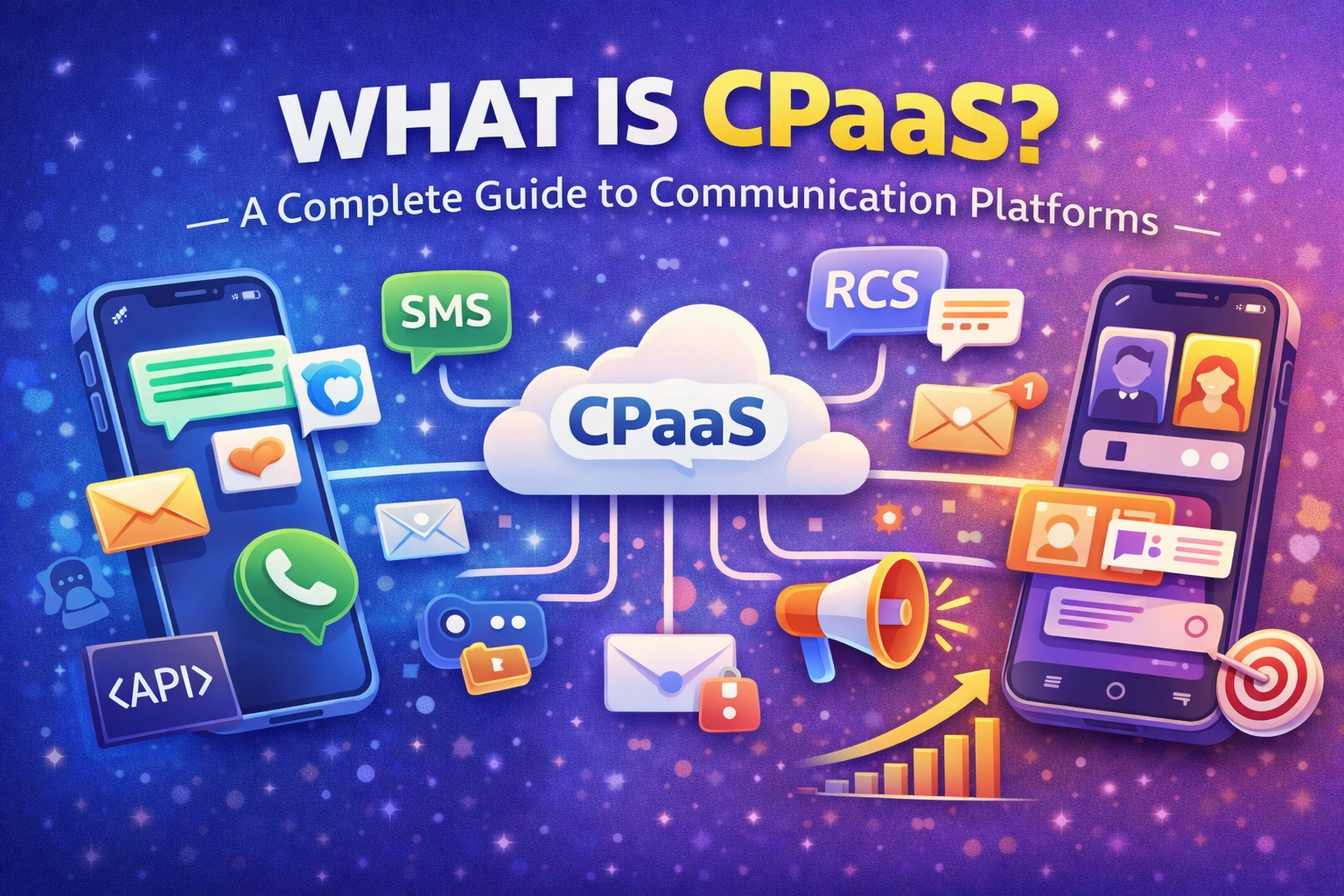
CPaaS stands for Communications Platform as a Service. It is a cloud-based communication infrastructure that provides APIs, SDKs, routing systems, analytics, and other tools that developers can use to embed communication capabilities into software applications.
The key idea behind CPaaS is simple: instead of building telecom functionality internally, businesses can access communication infrastructure through programmable interfaces.
For example, an e-commerce application may use an SMS API to send an order confirmation, a WhatsApp API to provide shipment updates, and a Voice API to contact a customer when delivery requires additional verification.
Why Was CPaaS Introduced?
Before programmable communication platforms became widely available, businesses often had to build communication systems around individual telecom providers and specialized infrastructure. This created several operational challenges.
Complex Infrastructure
Businesses needed communication gateways, servers, integrations, monitoring systems, and telecom connections.
Multiple Providers
Different communication channels often required separate providers and integrations.
Limited Scalability
Communication infrastructure had to be expanded as message and call volumes increased.
Development Complexity
Building communication functionality internally required significant technical and telecom expertise.
CPaaS simplifies this model by exposing communication capabilities through APIs. Developers can integrate communication functionality into existing applications without having to build the complete underlying telecom infrastructure themselves.
How Does CPaaS Work?
A CPaaS workflow generally connects an application or business system with a communication platform, which then processes the request and delivers the communication through the appropriate channel.
User or Business Event
A customer action or business event occurs, such as signup, login, payment, order placement, or appointment booking.
API Request
The business application sends a request to the CPaaS API containing the required communication information.
Validation & Processing
The platform validates the request, processes the message, and applies relevant business and compliance rules.
Routing
The communication is routed through the appropriate channel and available communication infrastructure.
Delivery
The message, notification, or call reaches the intended recipient through the selected communication channel.
Delivery Status
Delivery information and communication events can be returned to the application through reports, APIs, or webhooks.
CPaaS Technical Architecture
A modern CPaaS platform consists of multiple layers that work together to process communication requests efficiently.
- Application Layer: The customer's website, mobile application, CRM, ERP, e-commerce platform, or backend system.
- API Layer: Provides secure interfaces through which applications submit communication requests.
- Authentication Layer: Validates API credentials, permissions, and access controls.
- Orchestration Engine: Processes requests and determines how communication should be handled.
- Routing Engine: Selects suitable communication routes based on configured rules, channel requirements, and delivery priorities.
- Communication Layer: Connects the platform with communication channels and underlying network infrastructure.
- Analytics Layer: Collects delivery information, performance metrics, campaign statistics, and communication events.
- Webhook/Event Layer: Sends real-time communication events back to the customer's application.
Communication Channels Supported by CPaaS
One of the biggest advantages of CPaaS is the ability to bring multiple communication channels together through a common programmable infrastructure.
SMS
SMS is widely used for OTPs, transactional notifications, alerts, reminders, and promotional communication.
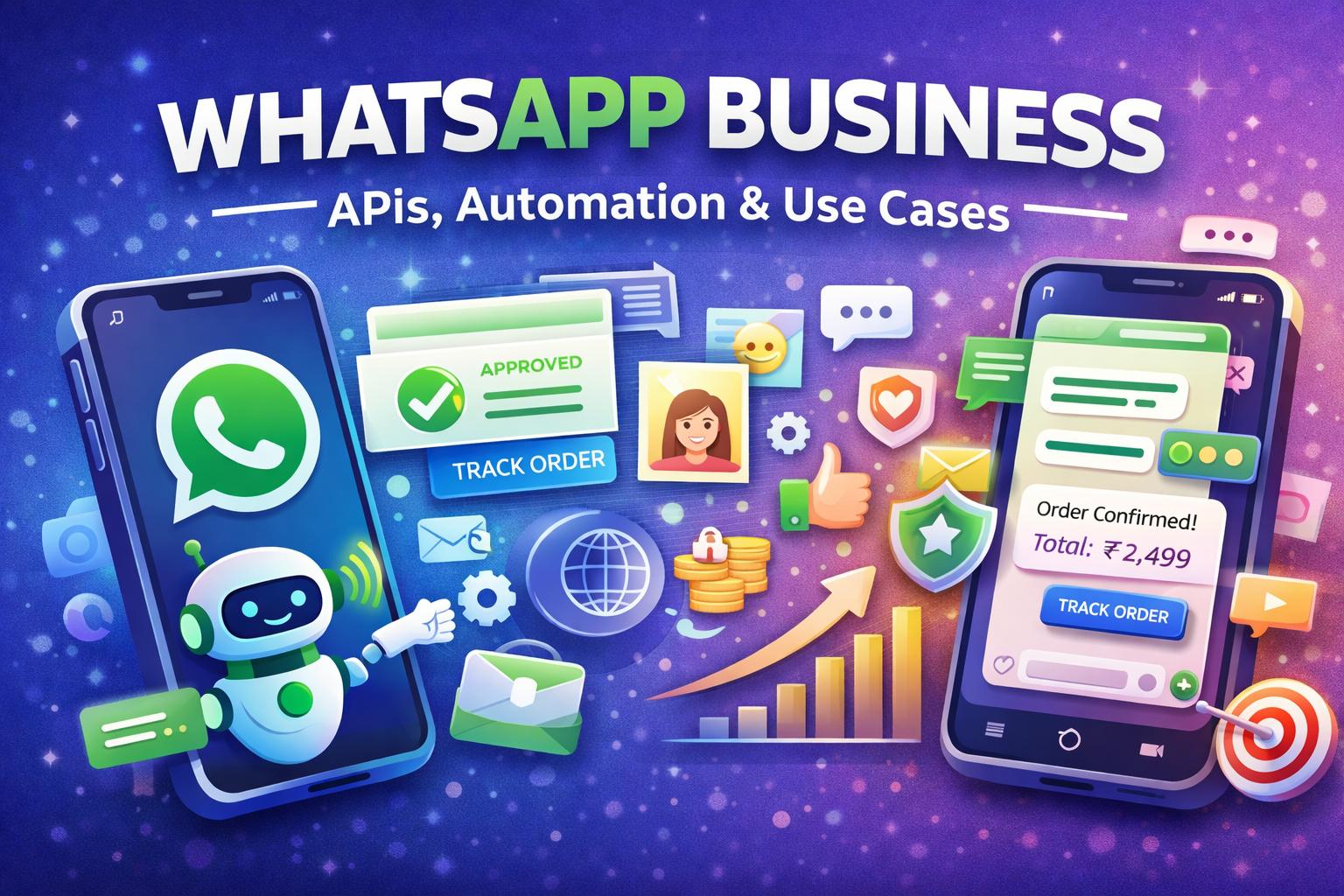
WhatsApp enables businesses to communicate using rich, conversational, and interactive messaging experiences.
RCS
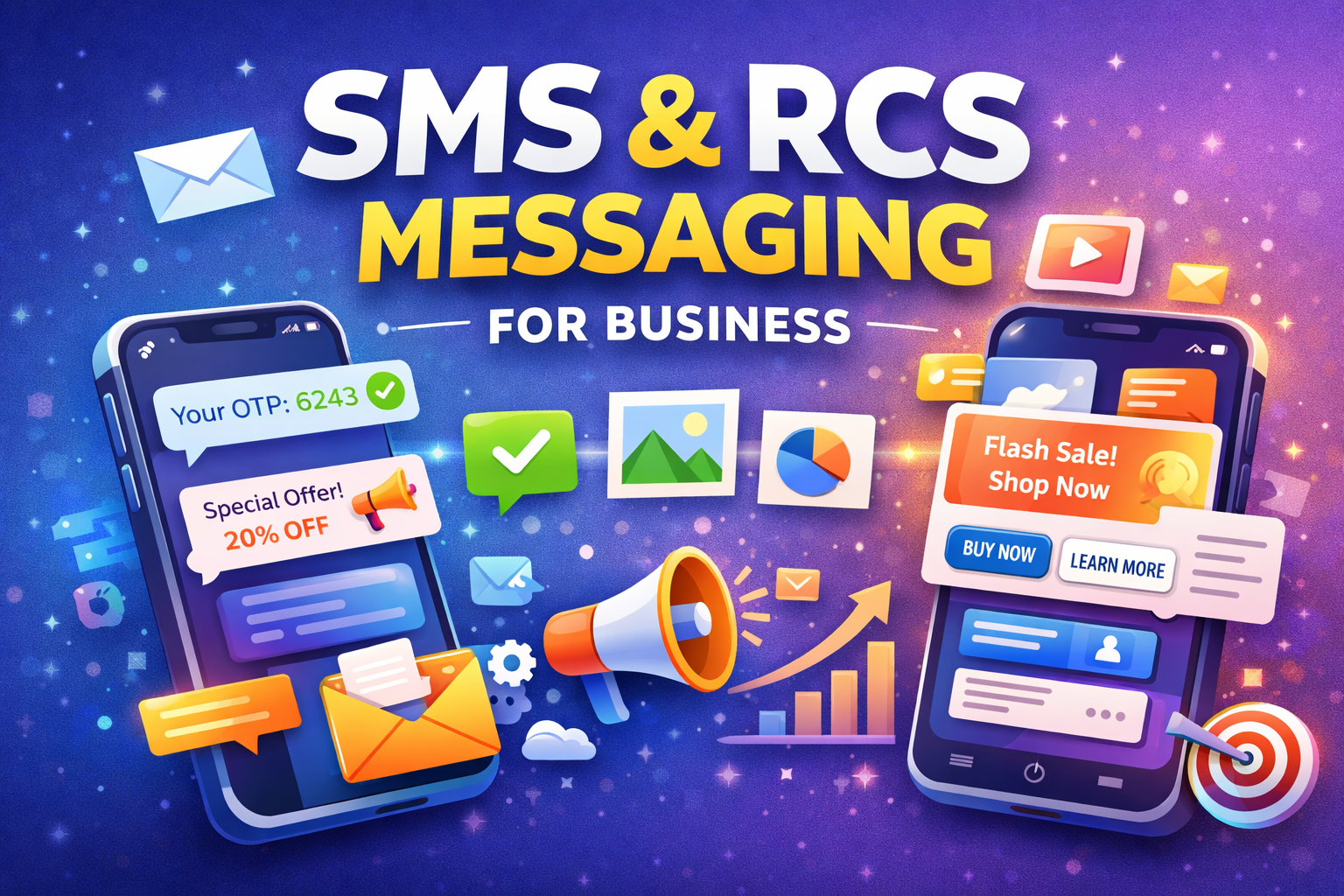
RCS enables richer business messaging experiences with branded profiles, media, buttons, suggested actions, and interactive content.
Voice
Voice APIs can be used for automated calls, IVR, notifications, customer support, and voice-based authentication.
Email APIs support transactional communication, reports, notifications, and large-scale email campaigns.
What Are CPaaS APIs?
APIs are one of the fundamental components of CPaaS. They allow software applications to communicate with the communication platform programmatically.
For example, when a customer requests an OTP, the application can send an API request containing the recipient's number and message information. The CPaaS platform processes that request and initiates delivery.
This API-driven architecture allows businesses to automate communication instead of manually sending individual messages or managing separate communication systems.
What Are Webhooks in CPaaS?
APIs allow applications to send requests to a CPaaS platform, while webhooks allow the CPaaS platform to send events back to the application.
For example, after an SMS is processed, the platform can send a delivery status event to the customer's server.
- Message submitted
- Message delivered
- Message failed
- Call initiated
- Call completed
- Communication status updated
CPaaS for Authentication and OTP
Authentication is one of the most common enterprise use cases for communication platforms.
Businesses can use CPaaS infrastructure to deliver one-time passwords and verification messages during account registration, login, payment verification, password recovery, and other security-sensitive workflows.
Account Verification
Verify a customer's mobile number during registration.
Login Authentication
Send verification codes during secure login workflows.
Transaction Verification
Support authentication during important transactions.
Password Recovery
Deliver verification codes during account recovery.
Real-World CPaaS Use Cases
CPaaS can support communication workflows across almost every industry where businesses need to communicate with customers, employees, partners, or users.
Banking & Financial Services
OTPs, transaction alerts, payment notifications, security alerts, reminders, and customer communication.
E-commerce & Retail
Order confirmations, shipment updates, delivery alerts, promotional campaigns, and customer engagement.
Real Estate
Lead notifications, property updates, follow-ups, appointment reminders, and customer outreach.
Healthcare
Appointment confirmations, reminders, notifications, follow-ups, and patient communication workflows.
Logistics
Shipment notifications, delivery updates, dispatch alerts, and customer coordination.
SaaS & Technology
Account verification, product notifications, usage alerts, onboarding, and customer engagement.
Benefits of CPaaS for Businesses
CPaaS can help organizations simplify communication infrastructure while giving development and business teams greater control over customer engagement.
- Faster Integration: Communication capabilities can be integrated into existing applications through APIs.
- Scalability: Communication infrastructure can support growing message and interaction volumes.
- Multi-Channel Communication: Businesses can work with SMS, Voice, WhatsApp, RCS, and Email through programmable communication infrastructure.
- Automation: Communication workflows can be triggered automatically based on business events.
- Analytics: Delivery and communication performance can be monitored using reports and analytics.
- Developer-Friendly Integration: APIs and webhooks make communication capabilities easier to integrate into software applications.
- Operational Efficiency: Centralized communication infrastructure can simplify management across multiple channels.
Challenges of Using CPaaS
While CPaaS provides significant advantages, organizations should also evaluate the technical and operational requirements before selecting a platform.
- API Integration: Development teams need to integrate APIs into their applications and workflows.
- Compliance: Businesses must follow applicable communication, privacy, messaging, and regulatory requirements.
- Delivery Dependency: Communication delivery can depend on network conditions, destination availability, and routing infrastructure.
- Security: API credentials, customer information, and communication data need appropriate security controls.
- Provider Selection: Businesses need to evaluate reliability, support, documentation, scalability, pricing, and available channels.
CPaaS vs SaaS vs UCaaS
CPaaS, SaaS, and UCaaS are different approaches to cloud-based technology and communication.
| Feature | CPaaS | SaaS | UCaaS |
|---|---|---|---|
| Primary Purpose | Build communication features | Use ready-made software | Unified business communication |
| Customization | High | Usually limited | Medium |
| API Integration | Core capability | Varies by product | Usually available |
| Coding | Usually required | Usually not required | Usually not required |
| Typical Users | Developers & enterprises | Businesses & teams | Organizations & employees |
Security and Compliance in CPaaS
Communication platforms often process sensitive business and customer information. Security therefore needs to be considered when selecting and implementing a CPaaS platform.
Businesses should evaluate how a CPaaS provider handles authentication, API access, data protection, monitoring, logging, communication security, and compliance requirements.
- Secure API authentication
- Access control and permissions
- Monitoring and logging
- Secure communication infrastructure
- Regulatory and messaging compliance
- Data protection practices
CPaaS and DLT Compliance in India
Businesses operating communication campaigns in India need to consider applicable telecom and messaging regulations. For business messaging, DLT-related requirements are particularly relevant to organizations sending large volumes of SMS.
Depending on the communication use case, businesses may need appropriate registrations, sender information, message templates, consent mechanisms, and other compliance configurations.
This makes compliance an important consideration when choosing a communication provider for enterprise messaging.
How to Choose the Right CPaaS Provider
Selecting a CPaaS provider should not be based only on the lowest message or communication cost. Businesses should evaluate the complete communication infrastructure and operational support offered by the provider.
API Quality
Check API documentation, authentication methods, SDK availability, and integration simplicity.
Delivery Performance
Evaluate delivery reliability, routing capabilities, latency, and reporting.
Channel Coverage
Ensure the provider supports the channels your business actually needs.
Scalability
The platform should be capable of handling increasing communication volumes as your business grows.
Support
Technical and operational support becomes especially important for mission-critical communication.
Pricing Model
Compare pricing based on channels, volume, routing, features, and overall communication requirements.
How Businesses Can Implement CPaaS
A CPaaS implementation typically begins by identifying the communication workflows that need to be automated.
Identify Use Cases
Determine whether the business needs OTPs, alerts, campaigns, voice calls, customer support, or other communication workflows.
Select Channels
Choose the appropriate communication channels based on the customer journey and business requirement.
Integrate APIs
Connect the business application with the CPaaS platform using APIs, SDKs, or available integration methods.
Configure Workflows
Define triggers, message templates, routing rules, authentication flows, and business logic.
Test Communication
Test API responses, message delivery, callbacks, error handling, and communication workflows.
Monitor & Optimize
Monitor communication performance and continuously optimize workflows based on delivery and business data.
Why Businesses Are Adopting CPaaS
Modern businesses increasingly depend on digital communication as part of their customer journey. Customers expect timely notifications, convenient support, secure authentication, and relevant communication across the channels they already use.
CPaaS provides the infrastructure needed to build these communication experiences directly into digital products and business workflows.
Conclusion
CPaaS has changed how businesses approach customer communication. Instead of building and maintaining complex communication infrastructure independently, businesses can integrate communication capabilities into their applications using APIs and cloud-based platforms.
From OTP authentication and transactional SMS to WhatsApp conversations, RCS experiences, Voice automation, and Email notifications, CPaaS can support communication throughout the customer lifecycle.
For businesses planning to scale their digital communication, the right CPaaS platform can provide the combination of integration flexibility, scalability, channel coverage, analytics, reliability, and operational support required for modern customer engagement.
The future of business communication is not about choosing a single channel. It is about delivering the right message, through the right channel, at the right moment.
Ready to Simplify Your Business Communication?
Explore Orbitel's enterprise communication solutions across SMS, Voice, WhatsApp, RCS, and Email, and find the right communication infrastructure for your business.